106
Downloads
50
Episodes
Based upon a lifetime spent in the classroom, teaching students of all ages, I believe that I have more than a few words of advice for those following in my footsteps. Being a classroom teacher, an educator, of so many, has been the greatest privilege but it took me an entire career to become a master of my craft. Now I want to offer a Master Class in teaching to others, focussing on the issues of today. I invite you to follow up listening to me by emailing ifou ever have any questions. It would be my pleasure.
Episodes
Oct 30, 2021
Oct 30, 2021
12 min
In this podcast, I briefly review the various interations of what came to be called the Internet from the mid '80s until now. I go back in time to AOL Online and CompuServe which then became the World Wide Web and eventually the Internet. I lay out how the changes came to be and why and what these differences made to their use in schools in Teaching and Learning.

Oct 30, 2021
Oct 30, 2021
13 min
In this episode, I review my history with the use of the computer. I declare up front that it never ceases to amaze me how I became so computer savvy. I trace it back to my days as a graduate student working for a professor who had a Canada Council grant to do social research and I became his assistant. I just seemed to intuitively understand what the technology required of me and almost changed direction and went into Computer Engineering, way back then in the late '60s. I didn't obviously but when the personal computer first started to make its way onto the desktops of labs in schools, I picked up where I left off and never looked back. I want my listeners to understand that, if I can feel confident with technology, any one can.
Oct 27, 2021
Oct 27, 2021
11 min
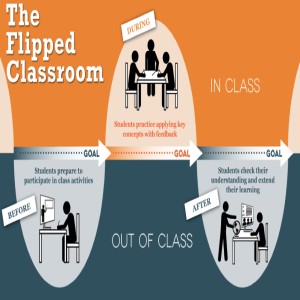
It has become all the rage to talk about flipping classrooms. What that implies is having students read materials, or watch a video, or conduct some sort of an experiment, when they are alone, at home or in a work space of some kind. THEN, the class assembles and talks about or deconstructs or questions what has been read or watched or experienced. Technology has facilitated this in a huge way and the pandemic has made it an even more robust and constructive way to approach classroom learning. It follows from that, that there are steps to follow so that deep learning ensues. I talk about all of this in this podcast.
Oct 27, 2021
Oct 27, 2021
15 min
Google is a very robust tool. There is no doubt about it. However, it still requires a thoughtful approach to what we want to find out and how we are going to use the answers we find. The skills of doing good research are still the same and ought to be approached the same way they were approached in ages past. However, today, the danger is that information will be used that could be biased, distorted, untrue or misconstrued. So we need to TEACH our students how to approach Google the same way we were taught how to approach a card catalogue. Mastery of media skills is more important than ever given the proliferation of conspiracy theories and calls about false news. If we don't teach these skills when they are doing research in school, they will never acquire them later in life, to the detriment of society.
Oct 27, 2021
Oct 27, 2021
12 min
I made this podcast a couple of months ago. However, the importance of Open Source programming just becomes more obvious with every passing year. So much of what we ask our students to do and to think about are made possible because of the ability to share online and collaborate across huge distances. That would have been impossible before open source programming. I just read something on Wikipedia that had been updated to reflect something that happened last week. Having access to information that reflects recent research or new findings cannot be overemphasized in today's world.

Oct 27, 2021
Oct 27, 2021
14 min
From the earliest days of my teaching career, there used to be a unit I taught every year on the NEWSPAPER. Students would cut up papers I had delivered and do work on the Six Honest Serving Men that journalists had to answer the questions to - Who, What, When, Where, How, and Why. They would practice writing articles. They would do work on bias and point of view and talk about fact versus fiction. When the Internet came along, it was obvious that they had to learn about how to choose the sites they found their information on. Now, of course, all of this has become even more important. We all know now how easy It is to be led astray by conspiracy theories and forget all about bias and so forth. This video helps to focus on these thoughts and more.
Oct 19, 2021
Oct 19, 2021
20 min
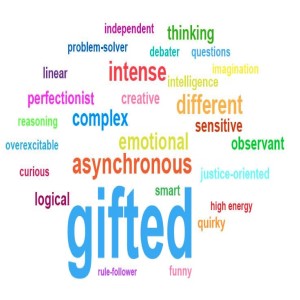
A few weeks ago, in the New York Times, there was a flurry of articles reporting on the move in New York City to cancel all its gifted education programs. Naturally, this led to the rest of the country and parts of Canada looking at their own gifted education programs and wondering whether NYC is right or wrong. In this podcast, I take a look at my own experiences as a student and as a teacher with regards to gifted education programs. I was in such a program when they first emerged and today, there are reasons why we ought not to call them gifted education at all but see them in light of individualized instruction. And individualized instruction takes us as educators back to the fundamentals of what it means to teach and students to learn. Listen to my podcast to understand why.

Oct 17, 2021
Oct 17, 2021
22 min
From the earliest movement of computers into classrooms and school administrative offices, there have been companies and individuals at the heads of those companies, who have been looking for ways to use software applications to make teaching and learning easier. There is no doubt that many of these companies were driven by the entrepreneurial spirit. There was huge money to be made in the educational marketplace. But there were also insightful individuals who knew enough to find areas of education where technology could find a niche and be useful not just for the business but also for teaching and learning. I explore several of these companies and their products in light of what we now know about the pandemic and how online learning has driven the marketplace for technological solutions to the administrative problems of teachers and schools and school jurisdictions.
Sep 11, 2021
Sep 11, 2021
15 min
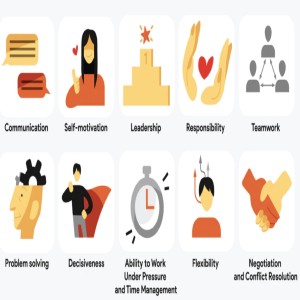
Whether we call them Work Habits, as they were referred to back in the '50s and '60s OR Attitudes to Learning as the were then called in the '70s or '80s OR Social Skills or Dispositions as they became in the '90s OR Social and Emotional Learning and Mindfulness as we think of them today, everything points to the covert curriculum in any home or classroom which needs to be addressed just as much as the knowledge and skills everyone needs to get ahead in the world and in society so that we ALL succeed. But how do we cultivate them in our students and how do we know when what we are trying to do is working?
Sep 11, 2021
Sep 11, 2021
11 min
As my expertise with computers in the classroom expanded, I found myself teaching staff development in-services and additional qualifications courses for teachers on the skills that I had acquired. From almost the beginning, I used online discussions on various topics related to the courses to enable students to understand how the discussions worked and to make it possible for interactions asynchronously throughout the course. I always used to tell my students that the time would come when they would have to use these skills in their careers as teachers and sure enough, that time has come along, BIG TIME! But there are skills involved in helping students to find their voices online and then sharing those voices with others. Listen to my podcast to learn more.